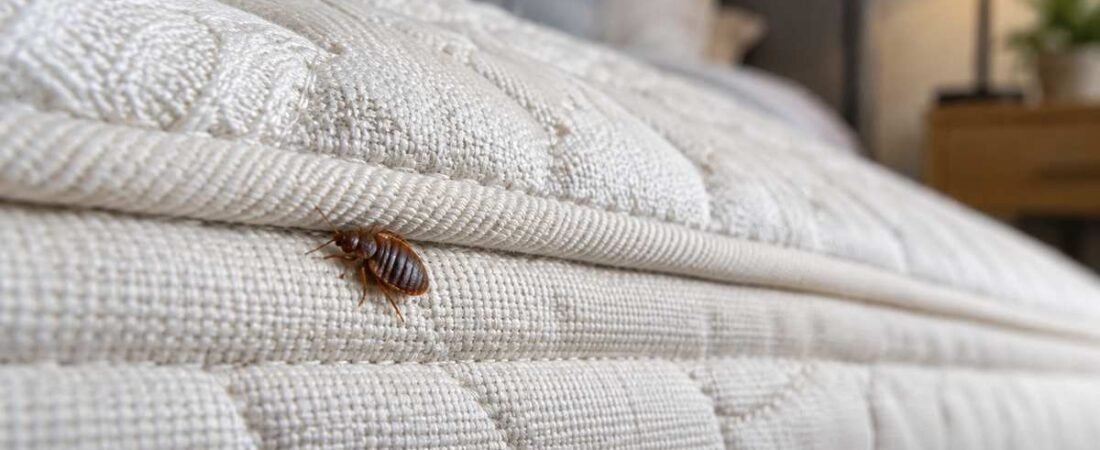
A few itchy marks after a night’s sleep do not prove that bed bugs are present. Skin reactions vary, and several other insects or conditions can produce similar marks. If you suspect bed bugs in a Barrie bedroom, the best first step is a careful inspection of sleeping areas, not an immediate spray of every piece of furniture.
Bed bugs are skilled at hiding close to where people rest. The challenge is to find convincing evidence without spreading insects or discarding belongings unnecessarily.
Start With Seams, Frames and Nearby Furniture
Strip the bedding slowly and check the mattress piping, labels, stitched folds and corners. Shine a flashlight along the box spring and bed frame, especially joints, screw holes and the underside of the headboard. Look for live, flat-bodied insects, pale shed skins and small dark marks concentrated in crevices. Eggs are difficult to see, so an apparently clean mattress does not rule out a problem.
Keep a clear bag nearby if you find a specimen. Photograph it against a coin or ruler rather than crushing it immediately; identification matters because carpet beetles and other small insects can be mistaken for bed bugs. Avoid carrying an uncovered pillow or blanket to another bedroom to inspect it. Moving items between rooms can move the problem as well.
Check a nearby bedside table and upholstered chair only after inspecting the bed. Work outward methodically instead of pulling every drawer out at once.
Decide What to Do With Suspicious Bedding
If a blanket or sheet may contain bed bugs, place it in a sealed bag before carrying it to the laundry. Choose a suitable hot wash and dryer cycle according to the item’s care instructions and professional guidance. Heat can be part of a control programme, but stuffing an appliance too tightly may prevent belongings from reaching a consistent temperature.
A pest control technician serving Barrie can confirm the insect, determine how far it has spread and recommend an extermination service suited to the rooms involved. Explain what you have already moved or washed. That information may affect the inspection and preparation instructions. A pest control technician should explain which clues actually confirmed the infestation, rather than relying on bite marks alone.
Do not throw away an intact mattress simply because you suspect an infestation. Unnecessarily dragging furniture through hallways can scatter insects. If an item must be disposed of, ask how to wrap and label it so others do not unknowingly take it home.
Make Travel and Second-Hand Purchases Part of the Investigation
Recent travel, overnight guests or used furniture can provide useful clues, although none automatically proves where an infestation began. Inspect luggage seams and pockets before placing a suitcase on the bed. Keep unwashed clothes contained while you check them, and look carefully at second-hand bedside furniture before bringing it inside.
Health Canada’s bed bug prevention advice describes where to search and how to reduce hiding places. It also warns homeowners to inspect used items rather than assuming that a clean surface is sufficient. You do not need to discard every purchase, but you do need a consistent inspection habit.
Ask family members whether bugs or marks appeared in another room, and record dates without assigning blame. Bed bugs can travel in ordinary belongings; their presence is not evidence of poor housekeeping. An accurate timeline is more helpful than guessing which visitor brought them in.
Avoid Treatments That Make the Problem Harder to Control
Do not spray sleeping surfaces with an unlabelled product, apply insecticide to skin or use a household fogger as a substitute for inspection. Treating the visible bed while insects remain in surrounding cracks may leave the underlying infestation unchanged. Some methods can drive insects into harder-to-reach spaces.
A professional extermination service may combine inspection, precise treatment, steam or heat where appropriate, laundering and follow-up monitoring. The exact plan depends on the infestation and available access. Ask which furniture needs moving, whether drawers must be emptied and how to store cleaned clothing safely. Do not guess at these steps; over-preparation can spread insects, while under-preparation can block treatment.
Tenants should inform their landlord promptly. In buildings with shared walls, the response may need coordination with property management rather than separate, unplanned treatments in individual units.
Check for New Activity After Treatment
Keep a record of sightings and where they occurred. Bed leg interceptors or other monitoring tools may help when used correctly, but a single insect or bite mark is not enough to measure success. Follow the technician’s instructions about cleaning treated areas; scrubbing too soon could interfere with a product intended to remain in a specific crack or crevice.
Ask when follow-up inspection is expected and what signs require a call before that date. Continue checking mattress seams and nearby furniture instead of constantly relocating to another room. Clear communication makes it easier to determine whether treatment has worked or whether further work is needed.
Health Canada’s bed bug treatment guidance explains why physical measures and licensed professional help may be necessary. For Barrie households, the practical goal is confirmed identification, careful containment and a treatment plan that can be monitored—not a rushed response to bites alone.